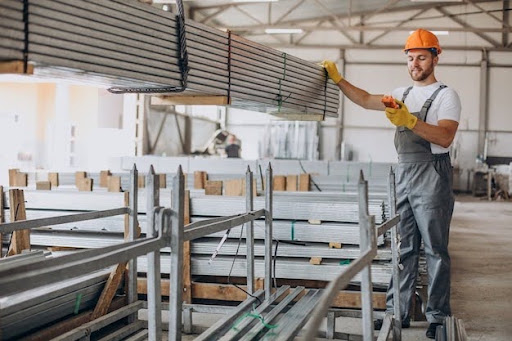
Aluminum is light, strong, and resistant to corrosion, which is why it appears in everything from aircraft parts to window frames and kitchen equipment. Turning raw sheets, plates, and profiles into finished products takes skill, the right equipment, and careful planning. Aluminum fabrication covers a range of processes, each suited to different shapes, volumes, and performance needs. This guide explains the most common techniques and what manufacturers should keep in mind when using them.
1. Cutting and Shearing
Cutting is usually the first step in aluminum fabrication. Common methods include sawing, shearing, laser cutting, plasma cutting, and waterjet cutting.
Lasers and waterjets produce clean, accurate edges, while saws and shears are practical for straight cuts and thicker sections. Choose the method based on thickness, tolerance, and edge quality. Sharp tools and proper settings reduce burrs and wasted material.
2. Bending and Forming
Aluminum fabrication often involves shaping flat material into brackets, enclosures, and panels. Press brakes, roll forming, and stamping are widely used for this purpose. Aluminum bends easily, but some alloys crack if the bend radius is too tight.
Test pieces help confirm the right tooling and angle, and designers should allow for springback, which is the slight return of the metal after bending.
3. Welding
Welding joins aluminum parts into strong, permanent assemblies. In aluminum fabrication, TIG and MIG welding are the most common choices, with TIG preferred for thin material and precise work.
Aluminum conducts heat quickly and forms an oxide layer, so surfaces must be cleaned thoroughly before welding. Skilled operators control heat carefully to limit warping and weak joints.
4. Machining and CNC Work
Machining removes material to create precise holes, slots, threads, and contours. Aluminum fabrication benefits from CNC milling and turning because the metal cuts quickly and holds accurate dimensions.
Cooling fluid and proper tool selection help prevent chips from sticking to the cutting edge. CNC programs also make it easy to repeat the same part consistently across large production runs.
5. Mechanical and Adhesive Joining
Not every assembly needs welding. Aluminum fabrication can also use rivets, bolts, screws, clinching, and structural adhesives. These methods avoid heat distortion and suit parts that may need disassembly or that combine different materials.
When joining aluminum to other metals, use isolation methods to reduce the risk of galvanic corrosion. Always test joints against real working loads.
6. Surface Finishing
Finishing protects the product and improves its appearance. Aluminum fabrication commonly ends with anodizing, powder coating, painting, brushing, or polishing.
Anodizing builds a hard protective layer, while coatings add color and weather resistance. Proper cleaning and surface preparation matter, because poor preparation causes peeling, staining, and uneven results.
Final Thoughts
Aluminum fabrication is the foundation of countless products, from aircraft components and vehicle frames to building facades and consumer electronics. Throughout this guide, we have looked at the main techniques manufacturers rely on: cutting, forming, welding, machining, mechanical and adhesive joining, and surface finishing. Each process affects the others, so the best results come when engineers plan the whole workflow before production begins.